
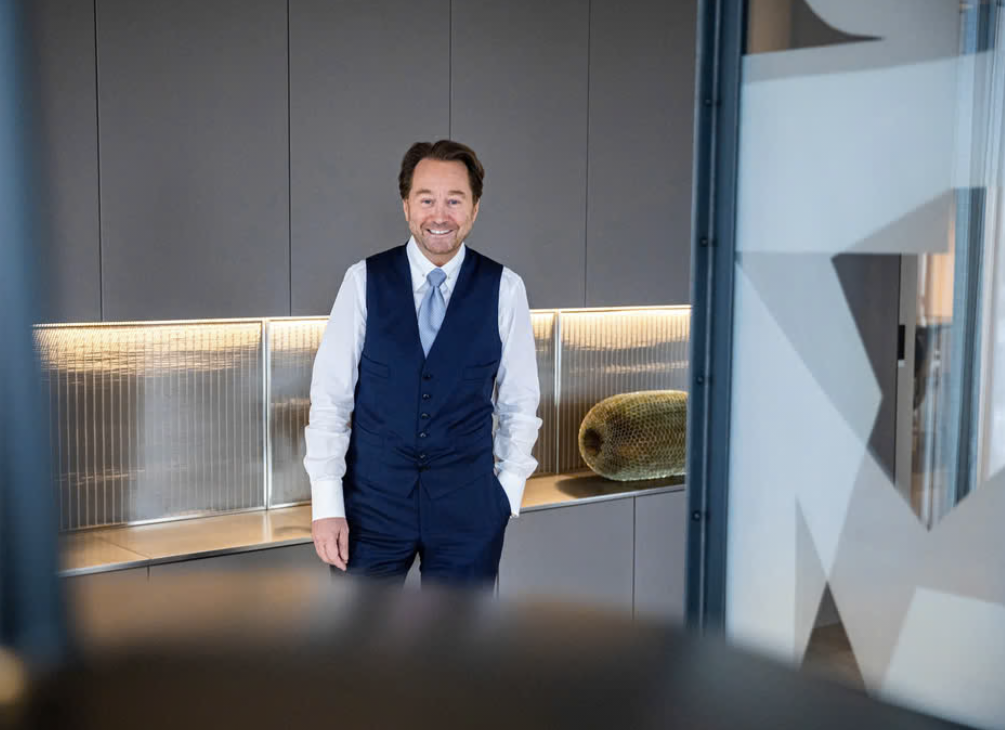
The story of Kjell Inge Røkke is one of the most controversial and compelling business journeys in Norway. From dropping out of school to building a global industrial empire, Røkke’s rise reflects ambition, risk-taking, and constant scrutiny. His career has been shaped by bold decisions, rapid expansion, and ongoing debates around wealth, taxation, and corporate influence. For those searching for a Kjell Inge Røkke story, Norwegian billionaire case study, or controversial business leaders in Scandinavia, this narrative offers deep insights into modern wealth creation.
Kjell Inge Røkke was born in 1958 in Molde, Norway, into a modest family. Unlike many business leaders who follow structured academic paths, Røkke left school early and began working as a fisherman. His early life was far removed from corporate boardrooms and financial markets.
However, this unconventional beginning became a defining strength. Working in the fishing industry gave him practical experience, resilience, and an understanding of operations from the ground level. It also exposed him to international markets, which would later influence his global business approach.
The turning point in Røkke’s story came when he moved to the United States in the 1980s. There, he began building a fishing business, acquiring vessels and expanding operations. His strategy was aggressive—he focused on scaling quickly and reinvesting profits into growth.
Over time, his company became one of the largest fishing operations in the United States. This success provided the capital and confidence needed for his next move.
In the 1990s, Røkke returned to Norway and entered the industrial sector. He became associated with Aker, a major Norwegian industrial group with interests in energy, maritime, and engineering. Through strategic acquisitions and restructuring, he gained control and transformed the company into a global player.
Røkke’s approach to business was direct and bold. He focused on creating value through consolidation, efficiency, and expansion. Under his leadership, Aker developed strong positions in oil services, offshore engineering, and renewable energy.
However, his rise was not without controversy.
One of the most debated aspects of the Kjell Inge Røkke story is his relationship with taxation. In recent years, his decision to relocate to Switzerland raised significant public discussion in Norway. Critics argued that wealthy individuals leaving the country to benefit from lower taxes creates imbalance in the economic system. Supporters, however, viewed it as a strategic financial decision within global business norms.
Another area of controversy has been his aggressive business tactics. Rapid acquisitions and restructuring often lead to questions about governance, employee impact, and market concentration. While these strategies can create efficiency and growth, they also attract scrutiny from regulators and the public.
Røkke has also been involved in legal issues earlier in his career, including a conviction related to financial practices in the United States. Although this was a significant event, he continued to build his business empire afterward, demonstrating resilience and the ability to recover from setbacks.
Despite controversies, Røkke has also positioned himself as a forward-thinking industrialist. In recent years, he has focused on sustainability and green energy initiatives. His investments in renewable energy, carbon capture, and ocean-based industries reflect a shift toward future-oriented business models.
From a strategic perspective, his success can be attributed to several key factors. First, his willingness to take risks allowed him to enter industries with high barriers and high rewards. Second, his focus on scale enabled him to build competitive advantages in global markets. Third, his ability to adapt to changing economic conditions helped him sustain growth over time.
The Kjell Inge Røkke story also highlights the broader dynamics of wealth in modern Europe. As globalization increases, business leaders operate across borders, making decisions that are influenced by international markets rather than national boundaries. This creates opportunities but also raises questions about responsibility and contribution to domestic economies.
For entrepreneurs, his journey offers important lessons. It shows that unconventional paths can lead to significant success. It emphasizes the importance of resilience, strategic thinking, and the ability to evolve. At the same time, it highlights the need to balance ambition with ethical considerations and public perception.
For policymakers and analysts, the story provides insight into the challenges of regulating large industrial groups in a globalized economy. Ensuring fair competition while encouraging investment is a complex task, especially when businesses operate across multiple jurisdictions.
Today, Kjell Inge Røkke remains one of Norway’s most influential business figures. His companies continue to operate globally, and his decisions impact industries ranging from energy to maritime services.
In conclusion, the Kjell Inge Røkke story is not just about building wealth. It is about navigating complexity, controversy, and change.
For those exploring Norwegian billionaire stories, industrial business case studies, or controversial entrepreneurs in Europe, this narrative provides a comprehensive understanding of how success is built—and challenged—in modern economies.
It ultimately raises a critical question:
In a global world, where business has no borders,
how should responsibility be defined?