

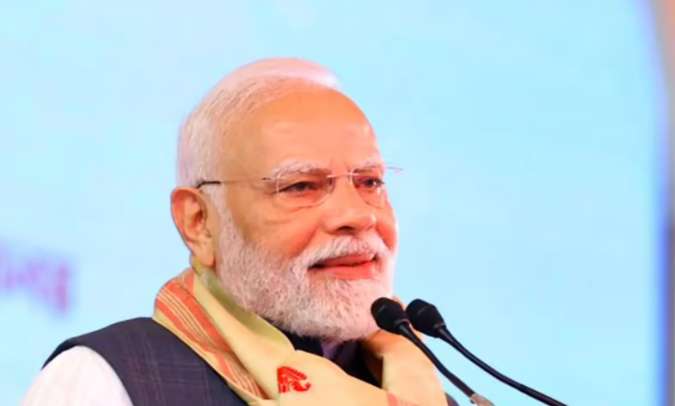
Few political leaders have experienced a journey as remarkable as Narendra Modi. Rising from humble beginnings in the town of Vadnagar, Gujarat, Modi’s path to becoming India’s Prime Minister is one of perseverance, discipline, and public service. Over the years, he has become one of the world’s most recognized political leaders, known for his emphasis on economic development, digital transformation, infrastructure, and India’s growing role on the global stage.
Supporters credit him with accelerating infrastructure projects, expanding digital governance, and strengthening India’s international profile. Critics have raised concerns about aspects of his policies and governance. Regardless of differing political perspectives, Narendra Modi has had a profound impact on India’s political landscape and remains one of the country’s most influential leaders.
His journey demonstrates how determination, organizational ability, and long-term vision can shape a lifetime of public leadership.
Early Life
Narendra Damodardas Modi was born on September 17, 1950, in Vadnagar, Gujarat.
He grew up in a modest family, where his father, Damodardas Mulchand Modi, operated a tea stall near the local railway station. During his childhood, Narendra is widely reported to have helped his family at the tea stall while continuing his education.
These early experiences exposed him to people from different backgrounds and taught him the importance of hard work, discipline, and perseverance.
Growing up with limited financial resources strengthened his determination to create opportunities through dedication and self-improvement.
Education and Early Interests
Modi completed his schooling in Vadnagar and developed an early interest in public speaking, debate, and social service.
As a young man, he became involved in volunteer activities and was influenced by ideas centered on nation-building and community service.
He later completed higher education through distance learning, earning degrees related to political science while continuing his public activities.
Throughout his youth, Modi emphasized self-discipline and lifelong learning, qualities that would later define his leadership style.
Entering Public Service
During his early adulthood, Modi became associated with the Rashtriya Swayamsevak Sangh, where he worked as a full-time organizer.
The experience gave him practical exposure to organizational management, community outreach, leadership development, and grassroots mobilization.
Over the years, he became known for his ability to coordinate large campaigns and manage complex organizational responsibilities.
These skills later proved valuable in electoral politics.
Rise in the Bharatiya Janata Party
Modi eventually joined the Bharatiya Janata Party, where he held several organizational roles.
Known for his strategic planning and disciplined work ethic, he steadily rose through the party ranks.
Throughout the 1990s, he played important roles in election campaigns and organizational expansion.
His growing reputation as an effective administrator eventually led to greater leadership responsibilities.
Chief Minister of Gujarat
In 2001, Narendra Modi became the Chief Minister of Gujarat.
During his tenure, Gujarat experienced significant investments in infrastructure, industrial development, electricity, road connectivity, and economic growth.
The state attracted domestic and international investors through initiatives designed to improve the business environment.
At the same time, Modi’s tenure also included the tragic 2002 Gujarat riots, one of the most debated periods of his political career. The riots resulted in significant loss of life and remain the subject of political and historical discussion. India’s Supreme Court-appointed Special Investigation Team found insufficient evidence to prosecute Modi, while the events continue to be scrutinized and debated by scholars, political leaders, and human rights organizations.
His years as Chief Minister established him as one of India’s most prominent political figures.
Becoming Prime Minister of India
In 2014, Narendra Modi led the Bharatiya Janata Party to a decisive electoral victory.
He became India’s 14th Prime Minister, promising economic reforms, improved governance, infrastructure development, digital transformation, and employment generation.
His campaign emphasized development, efficient administration, and aspirations for a stronger India.
The election marked one of the most significant political transitions in recent Indian history.
Major Initiatives
During his tenure as Prime Minister, Modi’s government introduced numerous national initiatives, including:
- Digital India, aimed at expanding digital infrastructure and government services.
- Make in India, encouraging domestic manufacturing and investment.
- Startup India, promoting entrepreneurship and innovation.
- Swachh Bharat Mission, focused on sanitation and cleanliness.
- Pradhan Mantri Jan Dhan Yojana, expanding access to banking services.
- Ayushman Bharat, providing healthcare coverage to eligible families.
- PM Gati Shakti and other infrastructure initiatives to improve logistics and connectivity.
His government also oversaw rapid growth in digital payments through platforms such as UPI, significantly increasing digital financial inclusion.
India’s Growing Global Presence
Under Modi’s leadership, India has expanded its engagement in international diplomacy.
He has strengthened relationships with major economies while participating in multilateral forums such as the G20, Quad, BRICS, and the United Nations.
India’s presidency of the G20 in 2023 brought additional international attention to its diplomatic priorities.
Modi has frequently emphasized India’s role as a voice for the Global South while promoting trade, technology cooperation, renewable energy, and strategic partnerships.
Leadership Style
Narendra Modi is widely recognized for his energetic campaigning, direct communication, and use of technology to engage citizens.
Programs such as Mann Ki Baat have allowed him to communicate regularly with the public through radio and digital platforms.
His leadership style combines centralized decision-making with a strong emphasis on implementation and public outreach.
Supporters view this as decisive governance, while critics argue for greater institutional consultation on certain policy issues.
Recognition and Influence
Narendra Modi has consistently appeared among the world’s most influential political leaders in international rankings and publications.
His speeches, diplomatic engagements, and policy initiatives receive significant global attention.
As one of the most followed political leaders on social media, he has also transformed the way political communication is conducted in India.
His influence extends beyond politics into discussions on technology, entrepreneurship, infrastructure, climate policy, and international relations.
Lessons From Narendra Modi’s Journey
His career offers several important lessons:
- Humble beginnings do not limit future success.
- Discipline and persistence can build long-term leadership.
- Organizational skills matter as much as vision.
- Communication plays a vital role in leadership.
- Public service requires adaptability and resilience.
- Leadership is often accompanied by both praise and criticism.
These lessons continue inspiring many people interested in public service and leadership.
Conclusion
The story of Narendra Modi is one of determination, political leadership, and national influence.
From helping at his family’s tea stall in Gujarat to serving as India’s Prime Minister, his journey reflects decades of organizational work, electoral success, and public service.
Whether viewed through the lens of economic development, governance, diplomacy, or political debate, Narendra Modi has played a defining role in shaping modern India. His leadership has influenced infrastructure, digital transformation, entrepreneurship, and India’s global standing, making him one of the most significant political figures of the 21st century.
His story reminds us that leadership is shaped not only by where one begins but also by the vision, resilience, and commitment one brings to serving a nation.