
Brunello Cucinelli has said the business began with a memory: his father coming home from the factory, humiliated, asking what he had done to deserve being treated that way.
The family had been farmers in Umbria, with no electricity, before moving to the city for factory work. The son did not set out to build a luxury brand. He set out to build a company where nobody came home like that.
Coloured cashmere
The commercial insight was narrow and correct. In the 1970s cashmere was sold almost exclusively in neutrals — beige, grey, camel — and treated as a conservative purchase. Cucinelli began dyeing it in colour.
That single move created a category. The house now describes itself as a Casa di Moda rather than a brand, and in 2025 reported revenues above €1.4 billion, up 11.5% at constant exchange rates, with profit rising alongside. First-half 2026 revenues reached €749.4 million, up 13.3% at constant rates, strong enough for the company to raise its guidance.
Solomeo
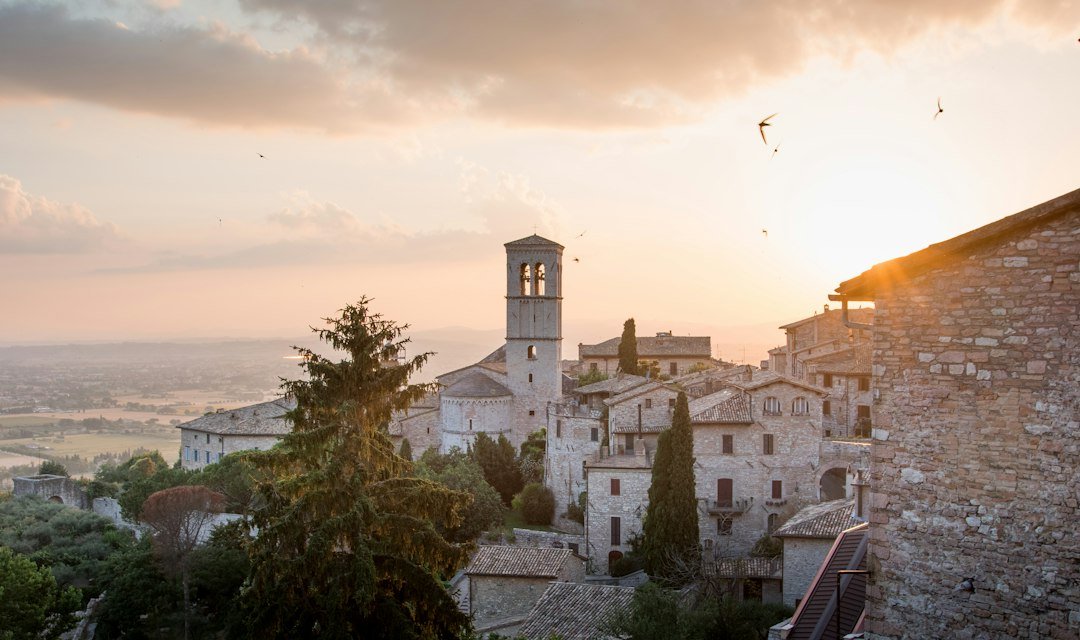
In 1985 he bought a crumbling fourteenth-century castle in Solomeo, a near-abandoned hamlet in Umbria, and moved the company there. Then he restored the village around it: a theatre, a library, a school of crafts to teach tailoring and cutting to young people.
The headquarters sits there still. In 2025 the company completed — six months early — a programme that doubled the Solomeo facility and added two new men’s tailoring workshops in Gubbio and Penne, built to carry production for the next ten to fifteen years.
Expanding artisanal capacity in high-cost Italy, when every competitor has long since moved production elsewhere, is a strategic choice disguised as sentiment. It is also what makes the price defensible.
Humanistic capitalism
His term for the philosophy is humanistic capitalism, and unlike most corporate language it has specific operational content: wages above the industry norm, a working day that ends on time, lunch eaten properly, no email at night, and a company structured around what the business calls human sustainability.
The company runs a Council for Human Sustainability and Humanistic Capitalism at board level, and hosts a symposium in Solomeo on soul and economics — the 2025 edition drew Yuval Noah Harari, Reid Hoffman and Audrey Tang.
It is not anti-commercial. Solomeo AI, the company’s own technology arm, built an AI-driven e-commerce platform called Callimacus, which attracted investment from Salesforce. A house built on hand-finished cashmere is also writing software.
The scrutiny
Italian commentators have noted the shadows that come with rapid expansion: a distribution chain stretching further each year and the rising cost of financing that growth. A philosophy of restraint becomes harder to hold the larger the company gets, and that tension is worth watching rather than dismissing.
What is actually portable
One unconventional product decision can create a category. Colour in cashmere was not a marketing campaign. It was the product.
Where you make it is part of what you sell. Keeping production in Italian villages costs more and underwrites the entire price position.
Values only count when they cost something. Above-market wages and a 5.30pm finish are expensive. That expense is the reason anyone believes the rest of it.
A farmer’s son bought a ruined castle in a village nobody wanted and built a billion-euro house inside it. The dignity his father was denied became the operating model.