

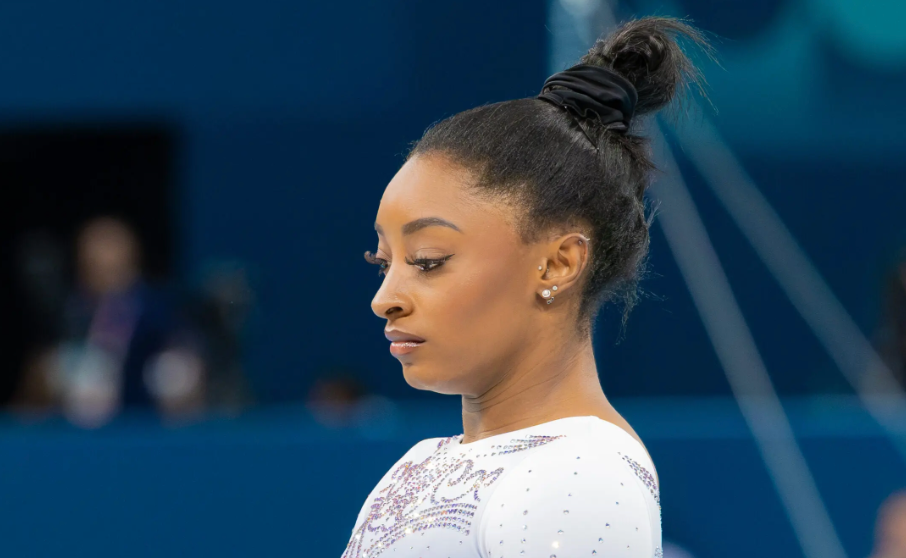
On 27 July 2021, in Tokyo, the best gymnast who has ever lived stepped off the floor mid-competition. She had lost her sense of where her body was in the air, a condition gymnasts call the twisties. In a sport where the margin between a landing and a broken neck is measured in fractions of a rotation, she decided not to find out.
She was criticised for weeks. It is now widely regarded as one of the most consequential decisions any athlete has made this century.
Columbus to Spring, Texas
Simone Biles was born in Columbus, Ohio, in March 1997, and spent her early childhood in and out of foster care. She was adopted at around six by her grandfather and his wife, Ron and Nellie Biles, and moved to Texas. She has been clear for years that she calls them Mom and Dad.
Gymnastics entered her life by accident. A daycare field trip was rained out and redirected to a gym, where a coach noticed a six-year-old imitating the older athletes and sent a note home. That is the entire origin story: bad weather and someone paying attention.
The record
She is the most decorated gymnast in history: 11 Olympic medals, seven of them gold, and 23 world championship golds. Four skills across three apparatus are named after her in the sport’s Code of Points, which means she performed elements nobody had successfully competed before.
The scoring system has at times been accused of deliberately undervaluing her hardest skills to discourage less capable gymnasts from attempting them. Whatever the governing body’s reasoning, the effect is unusual: an athlete so far ahead of her field that the rulebook had to account for her existence.
The part that mattered more
After Tokyo she took two years away from competition and spoke openly about therapy. She has said since that she had been neglecting her mental health during the extra year of pandemic-delayed preparation, focused entirely on keeping her body intact.
Then she came back. In Paris in 2024 she won team, all-around and vault gold, becoming the third woman ever to take multiple Olympic all-around titles, at 27, an age at which elite gymnasts are usually long retired.
The comeback is what people cite. The withdrawal is what changed the sport. Before Tokyo, pulling out for mental health was treated as failure of nerve. After it, a generation of athletes had a precedent set by the most dominant competitor in their field.
Undecided about LA
Biles is 29 and has not competed since Paris. Asked repeatedly about the 2028 Games in Los Angeles, she has put the odds at roughly even and declined to commit. She would be 31 at the opening ceremony. Her teammates Suni Lee, Jordan Chiles and Jade Carey are already training toward it.
She has described Paris as having taken a heavy physical toll, said she would need to be genuinely thrilled by the idea to return, and noted that family planning with her husband Jonathan Owens is now part of the calculation in a way it never was before. She also recently posted from her home gym in Texas, where she tried a double layout with her sister just to see whether she still could. She could.
Her stated test for going back is a question more people should ask about their own next move: not whether she can, but whether there is a good enough reason.
A six-year-old was sent to a gym because it rained. Twenty-three years later, the most decorated athlete in her sport is taking her time deciding what she wants. Having the standing to do that may be the real achievement.