
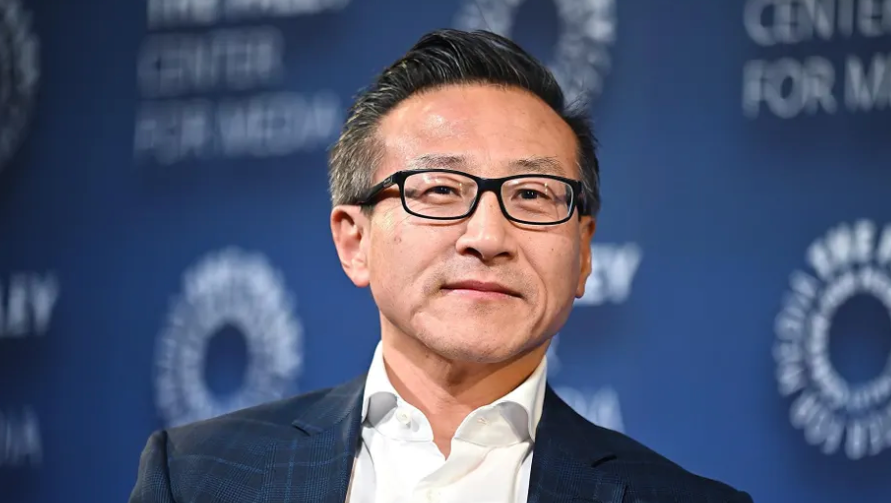
In 1999, Joseph Tsai was running Asian investments for a Swedish investment group, earning several hundred thousand dollars a year, with a Yale law degree and a career at a New York firm behind him. He flew to Hangzhou to look at a small internet company run by a former English teacher.
He went back, told his wife he wanted to join it, and took a salary reported at around fifty dollars a month.
Taipei to Lawrenceville
Tsai was born in Taipei in January 1964 into a family of lawyers. At thirteen he was sent alone to boarding school in New Jersey, where he spoke limited English and found his footing partly through lacrosse, a sport he still funds today. He went on to Yale for both his undergraduate degree and his law degree, then practised at a New York law firm before moving into private equity and, later, to Hong Kong with the Swedish group Investor AB.
By his mid-thirties he had the conventional version of success. What he did next only looks obvious in retrospect.
The co-founder who built the plumbing
Jack Ma was the face of Alibaba. Tsai was the reason it could raise foreign money at all. He wrote the company’s legal and financial architecture, incorporated it properly, structured the shareholdings of the founding group, and built the framework that allowed overseas capital to invest in a Chinese internet business.
He negotiated the early rounds, including the investments from Goldman Sachs and then SoftBank that kept the company alive. He ran strategic investments for years, and he led the 2014 New York listing that became, at the time, the largest IPO in history.
This is the underrated role in almost every large company: not the visionary, but the person who makes the vision financeable.
Sports as a second career
In 2017 he bought 49 per cent of the Brooklyn Nets, then took full ownership, along with the Barclays Center. He owns the New York Liberty in the WNBA, the San Diego Seals and Las Vegas Desert Dogs in lacrosse, and is a lead investor in the Premier Lacrosse League. In 2024 he sold part of the parent company at a valuation reported around US$6 billion.
It has not been a purely commercial venture. His public comments during the 2019 dispute over an NBA executive’s remarks on Hong Kong drew heavy criticism in the United States and put him in a position few team owners occupy: a Chinese technology chairman holding an American franchise, answerable to two audiences with incompatible expectations.
Chairman, and the AI turn
Tsai became chairman of Alibaba in 2023, brought back to steady a company facing regulatory pressure, a slowing domestic market and a falling share price.
The strategy since has been an aggressive bet on artificial intelligence and cloud infrastructure. At this year’s Apsara Conference the company unveiled what it billed as China’s most powerful AI chip and signalled plans for a model with up to ten trillion parameters. In September 2026 Alibaba announced a multi-year deal making it the Brooklyn Nets’ official technology and cloud partner and jersey patch sponsor, with a real-time 360-degree replay system at Barclays Center from the 2026-27 season.
The two halves of his career now sell to each other. Owning the team turned out to be a distribution channel for the cloud business.
What founders can take from it
The structural work is the founding work. Tsai’s contribution was governance, incorporation and financing. Without it there is no Alibaba to have a vision about.
Take the pay cut when the asymmetry is obvious. He traded a large salary for equity in something unproven, at an age when most people are protecting what they have.
Unrelated interests compound. A lacrosse player from a New Jersey boarding school ended up owning professional franchises that are now a shop window for his company’s technology.
The fifty-dollar salary is the part people repeat. The more instructive detail is that he was the one who could calculate exactly what he was giving up, and went anyway.