
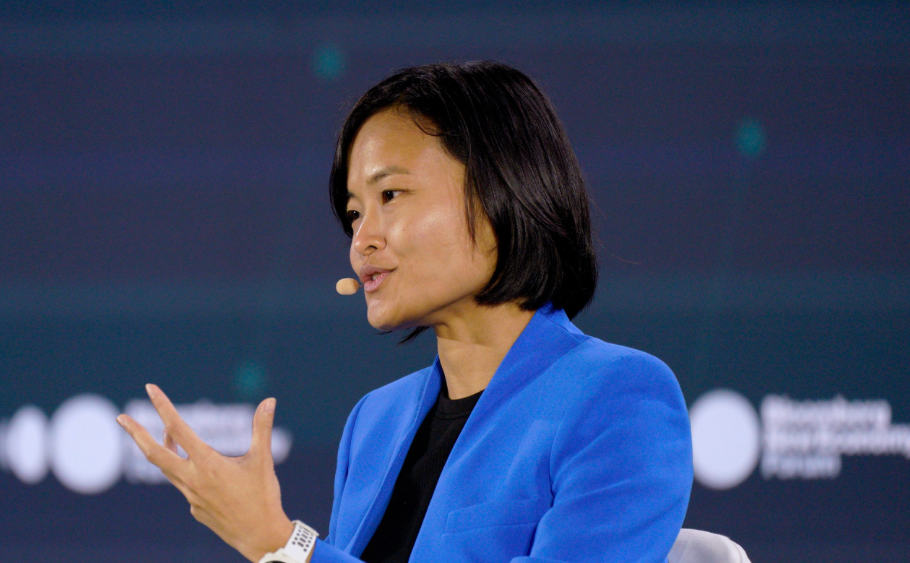
Growing up in Kuala Lumpur, Tan Hooi Ling had a routine for taking taxis alone. Text the licence plate to her mother. Send updates as she passed landmarks. Keep someone informed until she was home.
Years later, at Harvard Business School, she realised that the private protocol she had built for herself was something millions of women across Southeast Asia had also built, independently, for the same reason. That is not a market insight you get from a spreadsheet.
MyTeksi
In 2011 she and her classmate Anthony Tan — no relation — developed the idea for a business school venture competition: an app connecting passengers to licensed taxi drivers, with the driver’s identity known before the ride began. They launched it in Malaysia in 2012 as MyTeksi.
What happened next is the part most founder stories leave out. She did not join full-time. McKinsey had sponsored her MBA, so she went back and served out her bond, then took a role at Salesforce in San Francisco, building the company on nights, weekends and holidays from the other side of the world. She joined full-time in April 2015, three years after launch.
The one who stayed out of frame
MyTeksi became Grab, and Grab became a superapp spanning ride-hailing, food delivery, payments and financial services across Southeast Asia. It listed on Nasdaq in December 2021 through a SPAC merger valuing it near US$40 billion.
Throughout, Anthony Tan was the public face and chief executive. Tan Hooi Ling ran operations, served as chief operating officer until 2022, then led technology and corporate strategy, and sat on the board from the listing. She was notably private, rarely gave interviews, and by most accounts preferred the field to the stage.
In May 2023, at 39, she announced she would step down from her operating roles and leave the board at the end of that year, remaining an adviser. Her co-founder said a succession plan had been in place for some time and that he supported her decision to pursue personal priorities.
Leaving well
Most co-founder exits are messy. This one was announced early, planned in advance, and accompanied by a continuing advisory relationship rather than a severed one. She left while the company was still fighting to reverse years of losses, which is the hardest moment to go and the moment when going quietly matters most.
Three things worth borrowing
Your own unmet need is market research nobody else has. Safety was not a feature decided in a meeting. It was the reason the product existed.
You can honour your obligations and still build. She finished what she owed McKinsey and built Grab in the margins for three years. The company survived the delay.
Someone has to want the unglamorous half. Every visible founder has a counterpart handling operations, engineering and the things that do not photograph well. Those partnerships are the ones that last.
A girl texting licence plates to her mother is a small, sad piece of ordinary life in many cities. One of them built a company around it and changed how a region gets home.