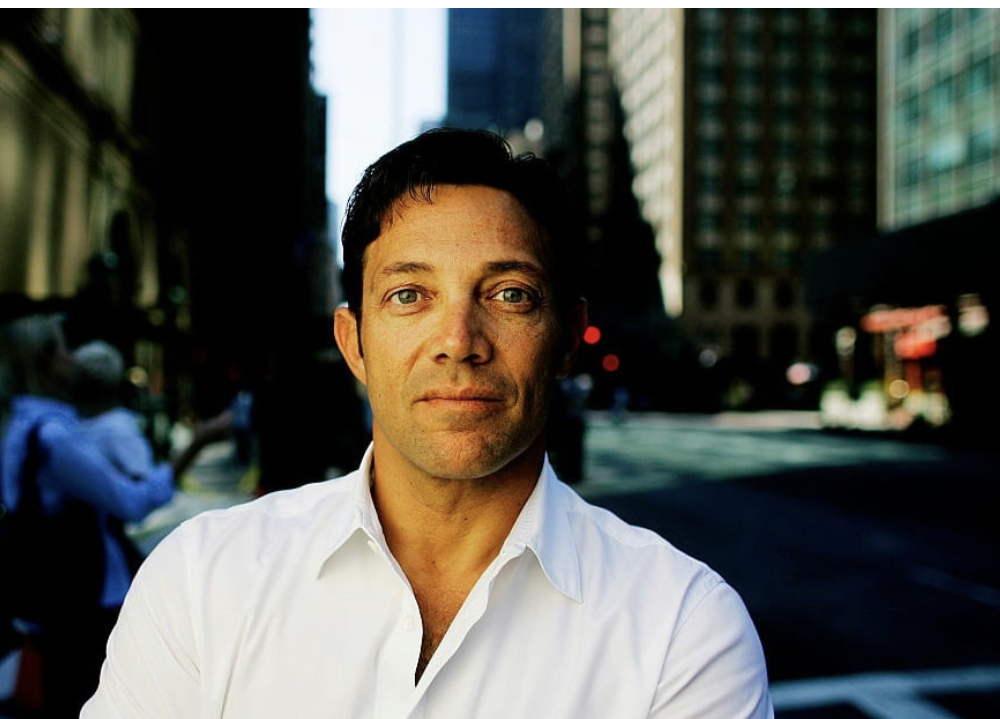


Larry Fink’s journey to building BlackRock did not begin with dominance — it began with discipline shaped by failure.
In the early stage of his career on Wall Street, Fink was a highly successful bond trader. He had a sharp understanding of fixed-income markets and rapidly gained credibility in the financial world. However, a major miscalculation on interest rate movements led to losses of nearly $100 million for his employer.
For many professionals, such a setback would have ended their leadership trajectory. For Fink, it became the foundation of a new philosophy.
He realized something critical:
Finance was not failing because of a lack of ambition — it was failing because of weak risk measurement.
Markets reward intelligence, but they punish overconfidence.
That insight shaped his long-term mission — to build an investment firm where risk analytics would be as important as returns.
In 1988, he co-founded BlackRock with a small team and a clear objective: combine asset management with sophisticated risk control systems. At the time, most firms were focused primarily on sales performance and client acquisition. Fink focused on infrastructure.
He wanted transparency.
He wanted data.
He wanted systems that could survive volatility.
That mindset differentiated BlackRock from the beginning.
The Turning Point
The defining turning point in Larry Fink’s leadership came with the development of Aladdin — BlackRock’s proprietary risk management and portfolio analytics platform.
Aladdin was not just internal software. It became the technological backbone of institutional investing. It allowed clients to measure portfolio exposure, simulate stress scenarios, and understand systemic risks in real time.
This transformed BlackRock from a traditional investment firm into a financial technology-driven institution.
The second major turning point came during the 2008 global financial crisis. As markets collapsed and institutions struggled to assess toxic assets, governments and major banks turned to BlackRock for advisory services.
Because of its risk infrastructure and credibility, BlackRock was positioned not as a victim of the crisis — but as a stabilizer.
In 2009, the acquisition of Barclays Global Investors, including the iShares ETF platform, accelerated BlackRock’s expansion dramatically. This move positioned the firm at the center of the fast-growing exchange-traded fund market.
That acquisition cemented its status as the world’s largest asset manager.
The Strategy
Larry Fink’s strategy can be broken into five powerful principles:
1. Risk Management as Core Identity
BlackRock embedded analytics into every investment decision. Risk was not a department — it was culture.
2. Technology-Led Asset Management
Through Aladdin, BlackRock created recurring revenue streams and operational scale. The firm became both a money manager and a fintech infrastructure provider.
3. Institutional Trust Building
Instead of focusing primarily on retail hype, BlackRock built deep relationships with pension funds, sovereign wealth funds, and governments.
4. Strategic Acquisitions for Scale
The Barclays Global Investors acquisition expanded assets, strengthened ETF leadership, and enhanced global reach.
5. Long-Term Capital Perspective
Fink consistently advocated for sustainable investing, corporate governance, and long-term shareholder value. This positioned BlackRock as a thought leader, not just a fund manager.
The Result
BlackRock grew into the largest asset management company in the world, managing trillions of dollars across equities, bonds, ETFs, alternatives, and advisory services.
Larry Fink became one of the most influential voices in global finance, shaping discussions around ESG investing, corporate governance, and systemic risk.
His leadership redefined modern asset management.
He proved that scale in finance does not come from speculation — it comes from systems.
He transformed a failure into a philosophy.
He turned risk into opportunity.
He built infrastructure instead of noise.