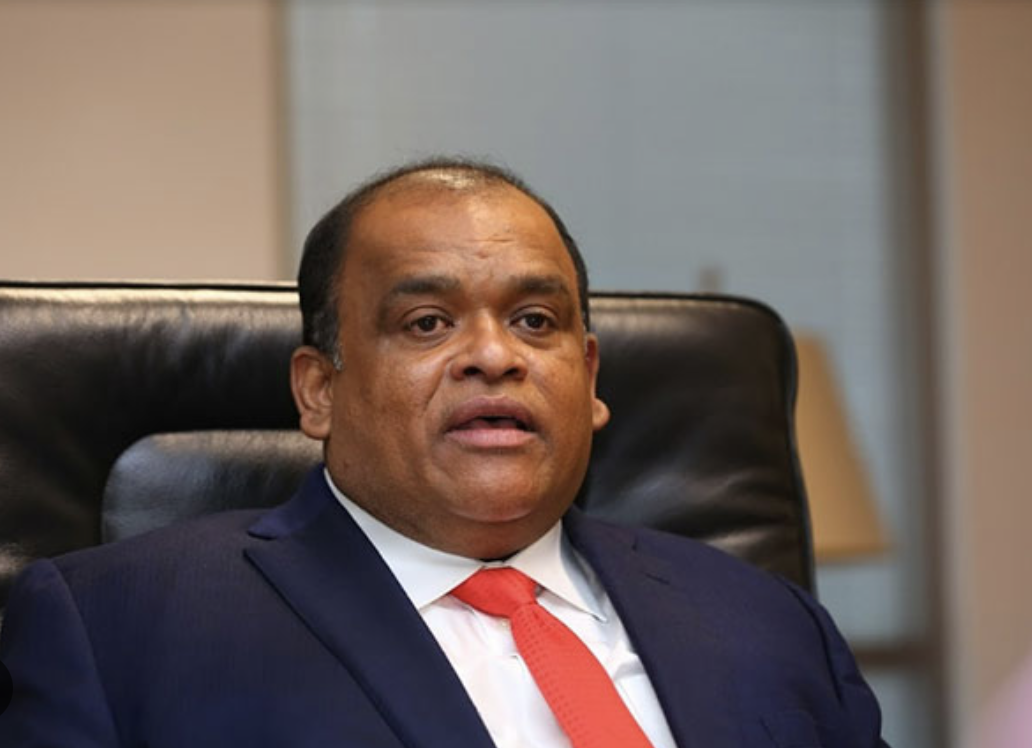


Byju Raveendran grew up in Azhikode, a small coastal village in Kerala’s Kannur district. His parents were teachers—his father taught physics, his mother mathematics—in a Malayalam-medium government school. Byju was a reluctant student who skipped most classes to play football and cricket, then learned everything at home on his own terms.
After completing his B.Tech in mechanical engineering, Byju joined a multinational shipping company as a service engineer in 2001. The job was stable, well-paying, and gave him international experience based in Singapore. It was the dream career most Indian engineers chase.
But during vacations back in India, something unexpected happened. Friends preparing for the CAT exam (Common Admission Test for MBA programs) asked Byju for help. He agreed casually, helping them crack math problems using his own intuitive methods. His friends suggested he take the exam himself, just to see how he’d do.
Byju scored 100 percentile—the top 1% in India. His friends were shocked. To check if it was a fluke, he took the exam again the next year. 100 percentile again. He received calls from all six top IIMs. He didn’t join any of them.
Word spread. Students started approaching Byju for coaching. What began as helping a few friends turned into informal weekend classes with dozens, then hundreds of students. By 2005, Byju faced a decision: continue his comfortable engineering career or pursue his unexpected passion for teaching.
In 2005, Byju quit his job and moved back to India to teach full-time. His family and friends thought he was crazy. Why abandon a stable career for the uncertainty of teaching? But Byju saw something others didn’t: teaching wasn’t just a job—it was his calling. He started Byju’s Classes, offering CAT preparation through live sessions.
Within years, his classes grew to stadium-size crowds of 20,000-25,000 students. He became a celebrity teacher, commuting between cities during weekends, teaching in sports stadiums because classrooms couldn’t hold the numbers. But Byju wasn’t satisfied. He wanted to reach millions, not just thousands. He needed technology.
The Turning Point
In 2011, Byju and his wife Divya Gokulnath (a former student who became his co-founder) launched Think & Learn Private Limited, the parent company of BYJU’S. They shifted from competitive exam prep to K-12 education—kindergarten through Class 12. The mission expanded from exam success to fundamental learning.
In 2015, they launched ‘The Learning App’—a mobile application that would revolutionize Indian education. Instead of rote memorization and boring lectures, BYJU’S used cinematic videos, interactive games, and gamified quizzes. Learning felt like playing, not studying.
The app exploded. Within the first year, millions of downloads. Students loved it because it made difficult concepts easy and fun. Parents loved it because their children actually wanted to learn. The breakthrough was making education engaging, not just informative.
Investors noticed. In 2017, BYJU’S exceeded ₹260 crore in annual revenue and became profitable—almost unheard of for an edtech startup. By 2018, the company raised funding from Tencent and became India’s 11th unicorn at over $1 billion valuation. Byju Raveendran became India’s newest billionaire at 37.
The company went on an acquisition spree: TutorVista, Edurite, Math Adventures, US-based Osmo, and in 2021, Aakash Educational Services for nearly $1 billion. BYJU’S wasn’t just growing—it was building an empire.
During the 2020 COVID-19 pandemic, when schools closed globally, BYJU’S made the platform free for students. Instead of profiteering during crisis, they focused on mission. Adoption exploded. By late 2021, BYJU’S reached a valuation of $15 billion and served 150 million students worldwide.
High-profile partnerships followed: Disney collaboration to feature characters like Simba and Elsa teaching math and English. Shah Rukh Khan as brand ambassador. Sponsorship of the Indian cricket team jersey. BYJU’S became a household name across India.
The Strategy
Byju’s success came from reimagining education as engagement, not instruction.
Make Learning Fun, Not Painful
BYJU’S treated education like entertainment. Cinematic videos, gamification, Disney characters—learning felt like playing games or watching movies. This approach worked because it matched how children’s brains actually engage, not how outdated curricula assume they should.
Personalized Learning Paths
Every student learned at their own pace. The app adapted to individual progress, strengths, and weaknesses. This personalization is impossible in traditional classrooms with 40+ students but natural for technology.
Content Investment Over Marketing
“Most of the investments we raised have gone into product development,” Byju said. While competitors spent heavily on marketing, BYJU’S invested in creating world-class educational content. Superior product drove word-of-mouth, reducing acquisition costs.
Freemium Model with Premium Upsell
Basic content was free, premium features cost ₹10,000-20,000 annually. This freemium model let students try before committing, building trust and converting paying customers at scale. By 2018, 2.5 million of 35 million users were paid subscribers.
Aggressive Global Expansion
BYJU’S expanded to the US, UK, and Brazil, adapting content for local curricula. The Disney partnership helped crack English-speaking markets. Acquisitions like Osmo brought proven products and teams into the BYJU’S ecosystem.
Mission Over Money
Byju’s mantra: “The real fun is not in creating a multibillion-dollar company but in changing the way millions think and learn.” During COVID, making the platform free proved this wasn’t just talk. Purpose-driven companies attract passionate employees and loyal customers.
The Results
At its peak, BYJU’S was valued at $22 billion, making it the world’s most valuable edtech company. The platform served 150+ million students across multiple countries. Byju Raveendran’s net worth reached $3.4 billion (combined with co-founders), making him one of India’s youngest billionaires.
The company raised $1.6 billion across 16 funding rounds from marquee investors including Mark Zuckerberg, Tencent, Naspers, Tiger Global, Sequoia Capital, and Mary Meeker’s Bond Capital. Between 2013 and 2023, BYJU’S attracted ₹28,000 crore in FDI—the highest by any Indian startup.
BYJU’S became an Indian startup legend: featured as a Harvard Business School case study, named to Fortune’s ’40 Under 40′ list, and won the Business Standard Annual Award for Corporate Excellence. Byju joined India’s National Startup Advisory Council.
More importantly, BYJU’S transformed how millions learn. It proved that Indian edtech could compete globally, that technology could make education engaging, and that learning didn’t have to be painful.
Through the ‘Education For All’ foundation, Byju provided free education to 3.5 million underprivileged students, with goals to reach 5 million. He demonstrated that profit and purpose aren’t mutually exclusive.