
In the world of global business, the most impactful innovations often arise from a personal “pain point”—a moment where an individual realizes the market has failed to see them. For Anushka Shrestha in Nepal, that realization led to the modernization of traditional desserts. In England, a similar story of cultural disruption and corporate pivoting belongs to Ade Hassan MBE.
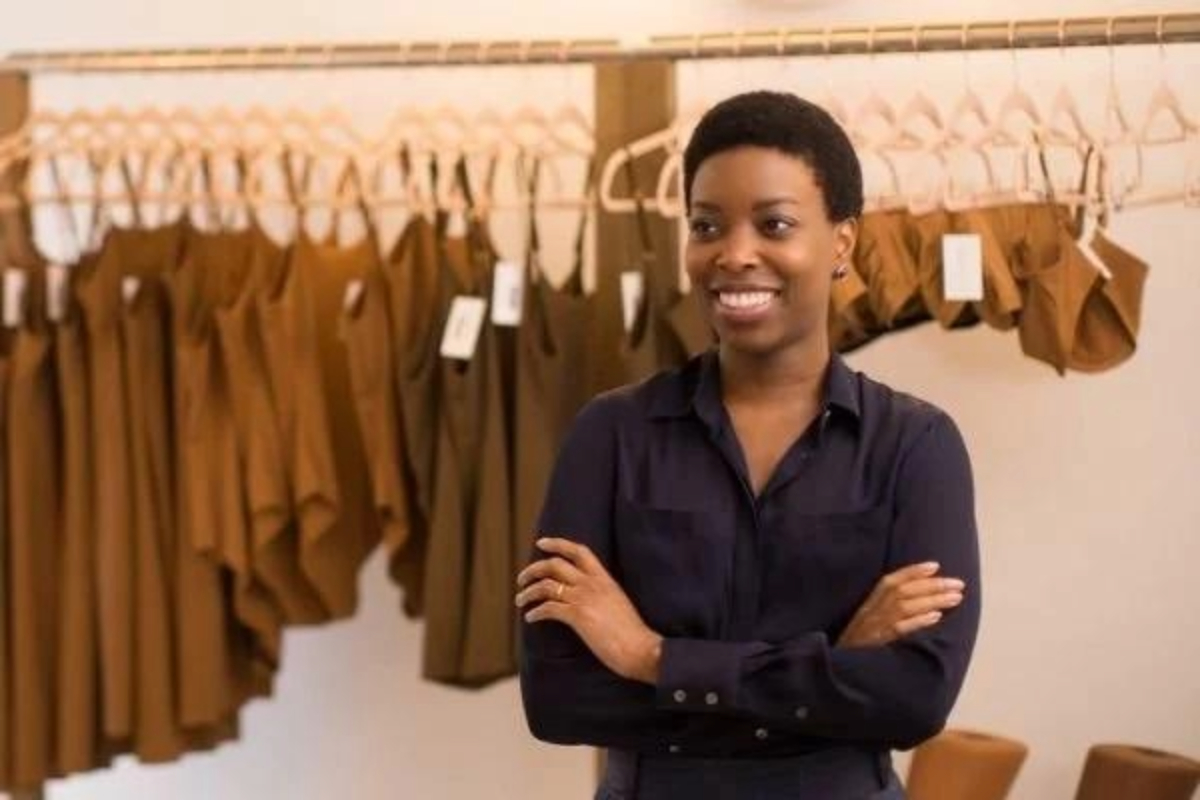
Ade Hassan is the founder of Nubian Skin, a brand that didn’t just launch a product line but launched a movement. By leaving a prestigious career in finance to redefine what “nude” means in the fashion industry, Hassan has become a symbol of the modern British entrepreneur: purposeful, disruptive, and deeply rooted in identity.
From Private Equity to Personal Passion
Before she was a pioneer in the fashion industry, Ade Hassan was a high achiever in the world of London finance. With a background in Private Equity, she was accustomed to data, market trends, and corporate strategy. However, despite her professional success, she faced a daily frustration that millions of women of color shared: the “nude” dilemma.
For decades, the fashion industry—from high-street retailers to luxury boutiques—defined “nude” as a single shade of peach or beige. For Hassan, a Black woman living in one of the most multicultural cities in the world, this wasn’t just a shopping inconvenience; it was a subtle form of erasure. To wear a sheer dress or a white silk shirt, she often had to resort to dyeing her own hosiery in a pot of tea or coffee just to get a shade that matched her skin.
Much like Anushka Shrestha’s realization that Nepal’s traditional Makkusé flavors were disappearing, Hassan realized that the British fashion landscape was ignoring a massive demographic. In 2014, she decided to trade her spreadsheets for sketches and launched Nubian Skin.
Identifying the Market Gap: Why Representation Matters
The concept of “nude” in fashion is intended to provide a seamless, invisible look. However, when the only available nude products are designed for Caucasian skin, they become highly visible on anyone else. This lack of inclusivity was a global oversight, but Hassan saw it as an opportunity for a “purposeful pivot.”
The challenge was not just about color; it was about quality and accessibility. Hassan spent years researching fabrics, dyes, and garment construction. She wasn’t looking to create a “niche” product; she wanted to create a staple that belonged in every department store in England. Her goal was to ensure that “nude” was no longer a color, but a concept that applied to everyone.
The Launch of Nubian Skin: A Cultural Phenomenon
When Nubian Skin finally debuted, the reaction was immediate and electric. The brand launched with an essential collection of hosiery and lingerie in four distinct shades: Berry, Cinnamon, Caramel, and Café au Lait.
The digital impact was massive. Within weeks, the brand went viral on social media, proving that there was a global hunger for representation. It wasn’t long before icons like Beyoncé and her dancers were wearing Nubian Skin on world tours. The brand successfully bridged the gap between a functional garment and a statement of self-worth.
Overcoming the Challenges of a Solo Founder
Leaving a stable career in finance to enter the garment industry is a high-risk move. Like many entrepreneurs, Hassan faced the “double hurdle” of being a woman of color in a space dominated by established, often slow-moving heritage brands.
She had to navigate manufacturing complexities, supply chain ethics, and the skepticism of investors who didn’t initially understand the scale of the “inclusive” market. However, her finance background became her “secret weapon.” Her ability to manage cash flow, project growth, and pitch with corporate precision allowed Nubian Skin to scale faster than many traditional startups.
Recognition and the MBE: A Royal Stamp of Approval
Ade Hassan’s impact on British business did not go unnoticed. In 2017, she was awarded an MBE (Member of the Order of the British Empire) for her services to Fashion. This was a significant milestone, mirroring the way Anushka Shrestha moved from the private sector into a role of national representation in Nepal.
The MBE signified that Hassan’s work was more than just retail; it was a contribution to the cultural fabric of the United Kingdom. She had successfully lobbied—through her products—for a more inclusive definition of British beauty. Today, her products are housed in the permanent collection of the Victoria & Albert Museum, cementing her legacy in the history of design.
The “Anushka Effect” in England: Business as Advocacy
There is a striking parallel between Ade Hassan and Anushka Shrestha. Both women:
- Utilized Corporate Foundations: Both used their experience in banking and finance to build sustainable, scalable business models.
- Solves a Cultural Void: Shrestha preserved Nepali heritage through taste; Hassan preserved dignity through skin-tone representation.
- Expanded into Mentorship: Both women have become vocal advocates for the next generation. Hassan is a frequent speaker on entrepreneurship, diversity in tech, and women’s empowerment in the UK.
The Future of Inclusive Fashion
Today, the “nude” landscape looks very different than it did in 2014. Major global brands have followed Hassan’s lead, expanding their shade ranges. While some might see this as competition, Hassan sees it as a victory. Her goal was always to change the industry’s standard, and the “Nubian Skin effect” has forced the entire fashion world to do better.
Hassan continues to innovate, expanding the brand into footwear and organic cotton basics, ensuring that the mission of inclusivity touches every part of a woman’s wardrobe.
Ade Hassan’s story offers several lessons for those looking to make a career pivot:
- Listen to Your Own Frustrations: If you cannot find a product that serves you, there are likely millions of others with the same problem.
- Leverage Your “Boring” Skills: Hassan’s finance background was just as important as her creative vision.
- Build a Mission, Not Just a Product: Nubian Skin succeeded because it stood for something—identity, pride, and visibility.
Ade Hassan MBE is more than a fashion designer; she is a disruptor who used the tools of British commerce to fix a systemic oversight. Her journey from the quiet offices of Private Equity to the bright lights of Buckingham Palace serves as a roadmap for any professional looking to turn their cultural identity into a global brand.
Much like Anushka Shrestha is redefining the “made in Nepal” label, Ade Hassan has forever changed what it means to be “nude” in England and beyond. She proved that when you design for everyone, you don’t just make a sale—you make history.