

Luca Moretti didn’t grow up dreaming of building a global brand.
He grew up surrounded by craft — the kind that takes years to master and seconds to overlook.
In the historic city of Florence, his family ran a small leather workshop tucked between narrow cobbled streets. His father and grandfather were artisans — not businessmen. They created some of the finest handcrafted leather goods, but like many traditional Italian craftsmen, they struggled to scale, market, or modernize.
By the time Luca turned 21, the workshop was barely surviving.
Tourists still passed by. They admired the products.
But they rarely bought.
Cheap factory-made alternatives had flooded the market, and the world was slowly forgetting what true craftsmanship looked like.
Luca had two choices:
Continue a declining legacy — or redefine it.
He chose the latter.
Leaving to Understand, Returning to Build
Luca left Italy to study business and branding at Bocconi University in Milan. There, he was exposed to the mechanics of global brands — how perception, storytelling, and positioning often mattered more than the product itself.
But something bothered him deeply.
Luxury brands across the world were selling “Italian craftsmanship” at massive markups — yet many of those products were not even made in Italy anymore. Meanwhile, authentic artisans like his father were barely making ends meet.
That contradiction stayed with him.
After graduation, instead of joining a corporate job, Luca returned to Florence — not to save the workshop, but to transform it.
Turning Craft into a Brand
The first thing Luca realized was simple:
They weren’t selling leather goods. They were selling heritage — but no one could see it.
So he started from scratch.
He created a new brand: “Vero Cuoio Firenze” (True Leather of Florence).
But unlike traditional workshops, Luca approached it like a global startup:
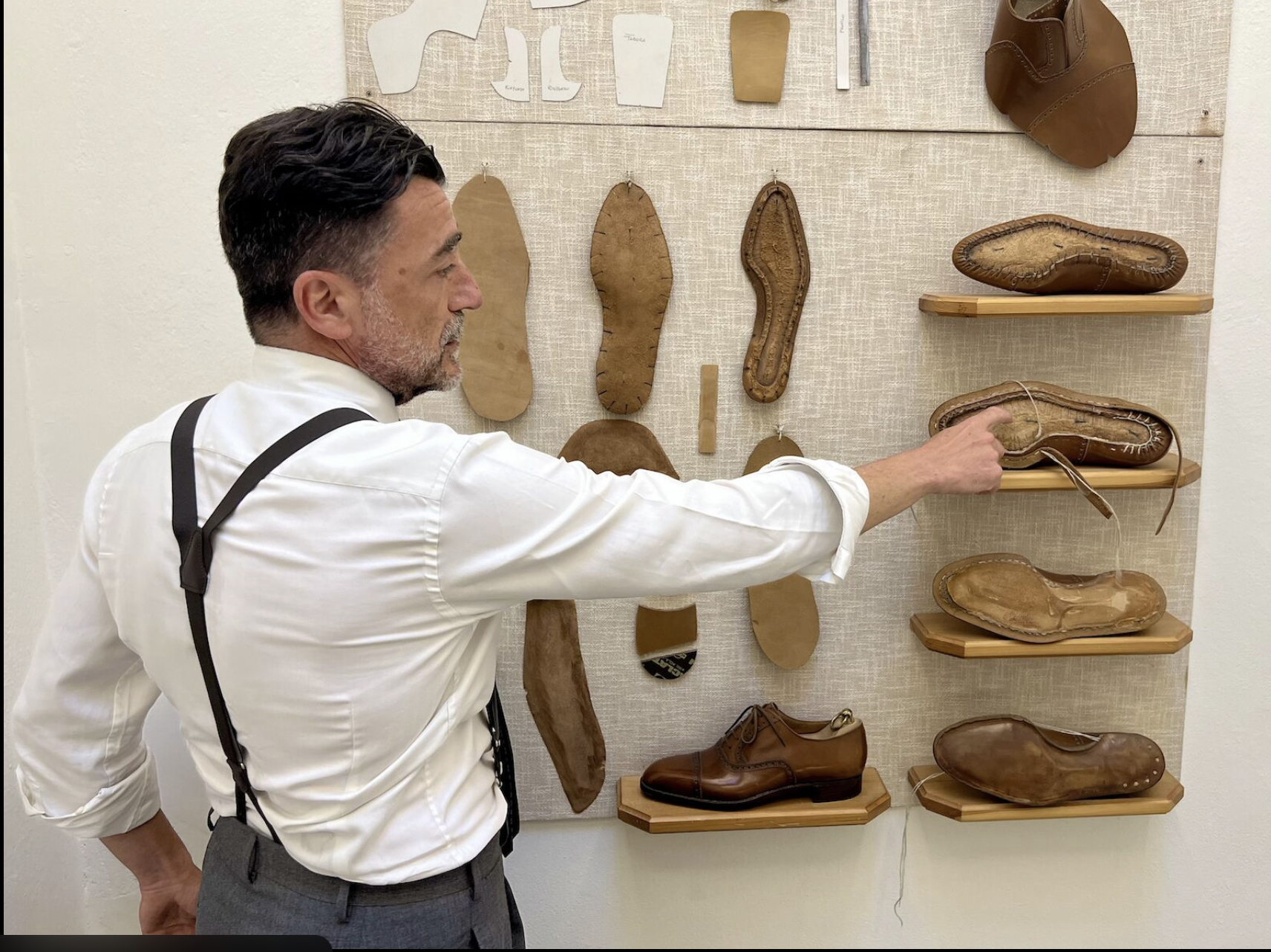
- He documented the entire craftsmanship process — from raw leather to finished product
- He highlighted the hands behind the work — his father, the artisans, their stories
- He redesigned products to balance tradition with modern aesthetics
- He introduced limited-edition collections to create exclusivity
Most importantly, he made the story visible.
Digital Was His Turning Point
Luca didn’t have the budget for luxury retail stores or fashion shows.
So he turned to Instagram.
He began posting:
- Close-up videos of hand-stitching
- The aging process of real leather
- Before-and-after transformations of old designs
- Conversations with artisans about their craft
What people once ignored suddenly became fascinating.
The imperfections, the human touch, the time involved — it all stood in stark contrast to mass-produced goods.
Within months, his page started gaining traction globally.
Orders began coming in from:
- New York
- Paris
- Dubai
Luca wasn’t just selling products anymore.
He was exporting authentic Italian identity.
Scaling Without Losing Soul
As demand grew, Luca faced a dilemma: scale production or preserve craftsmanship.
He chose a third path.
Instead of building factories, he built a network.
He onboarded small artisan families across Italy — from Naples to Bologna — creating a decentralized production model that maintained quality while increasing capacity.
Each product still carried a human touch.
Each piece still told a story.
Within five years:
- Vero Cuoio Firenze shipped to 30+ countries
- Collaborated with boutique luxury stores across Europe
- Generated millions in annual revenue
- Revived livelihoods of over 150 artisans
But Luca never called it success.
He called it restoration.
The Struggles No One Saw
Behind the growth were moments of doubt.
There were times when:
- Customers complained about higher prices compared to factory goods
- Production delays tested client patience
- Competitors copied his branding strategy without authenticity
At one point, a large distributor offered to mass-produce his designs in Asia to scale faster.
It would have made him wealthy overnight.
He declined.
Because Luca wasn’t building a fast brand.
He was building a true one.
Changing the Narrative
Luca’s journey sparked a shift.
Young Italian entrepreneurs began rethinking how traditional industries could evolve:
- Winemakers started telling vineyard stories
- Ceramic artists embraced digital platforms
- Textile makers focused on transparency and heritage
Luca often spoke at forums in Milan, sharing a simple but powerful belief:
“Craft doesn’t need to change. The way we present it does.”
The Real Lesson
Luca didn’t invent leather.
He didn’t disrupt the industry with technology.
He did something far more powerful:
He made people feel the value of something they had forgotten.
In a world chasing speed and scale, Luca chose patience and authenticity.
And in doing so, he proved:
You don’t have to outcompete the world — you just have to show it what it’s been missing.