

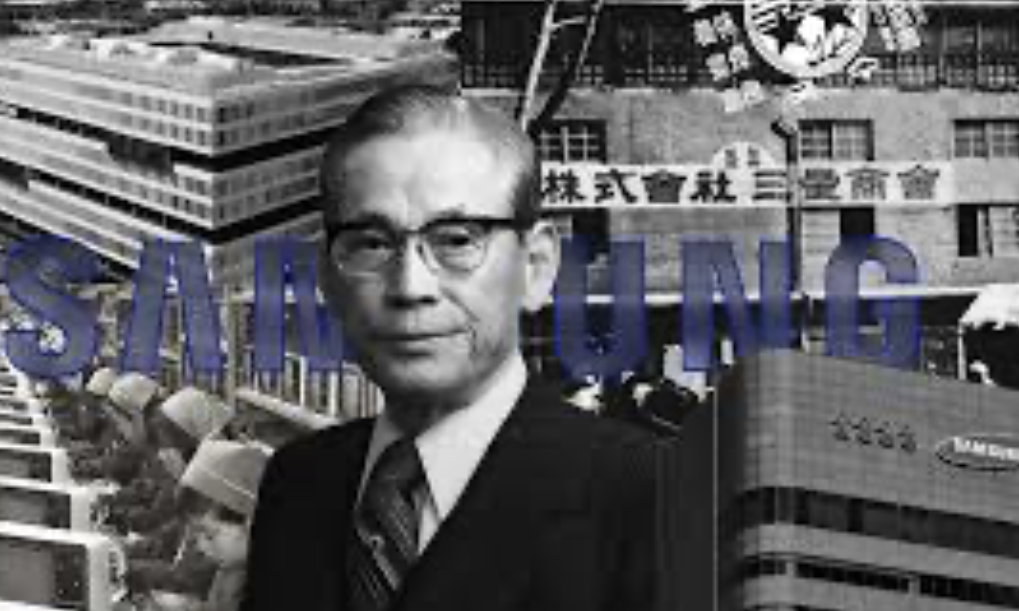
In 1938, long before smartphones and semiconductors defined global power, Lee Byung-chul founded a small trading company in Taegu, Korea. He named it Samsung, meaning “Three Stars” — a symbol of greatness, strength, and longevity. At the time, Korea was under Japanese colonial rule. Economic opportunity was limited, infrastructure was fragile, and industrial capacity was weak.
Samsung did not begin as a technology company. It started as a modest trading firm exporting dried fish, vegetables, and groceries to China. Yet even in those early days, Lee demonstrated a characteristic that would define his legacy: long-term thinking.
Born into a wealthy landowning family, Lee had access to comfort. But he chose entrepreneurship instead of inheritance. His early ventures, including rice milling and transportation, failed. Rather than discouraging him, those failures sharpened his understanding of capital allocation, operational discipline, and market volatility.
He learned quickly that survival required diversification.
Surviving War and Economic Collapse
The 1940s and 1950s were turbulent decades. World War II and the Korean War devastated the Korean peninsula. Factories were destroyed, cities flattened, and the economy collapsed.
Many businesses disappeared entirely during this period.
Lee Byung-chul, however, saw reconstruction as opportunity. As South Korea struggled to rebuild, he expanded Samsung beyond trading into sugar refining and textiles — industries critical to domestic recovery.
In 1953, he founded Cheil Sugar, helping reduce Korea’s dependence on imported sugar. Soon after, he established Cheil Industries, entering textiles — another strategic sector for employment and exports.
These moves were not accidental. Lee understood a fundamental economic principle:
Industrial production creates national strength.
Rather than chasing short-term profits, he focused on industries aligned with the country’s developmental needs. This alignment between private enterprise and national growth became a cornerstone of Samsung’s expansion.
The Strategic Leap into Electronics
The true turning point in Lee Byung-chul’s journey came in 1969 when Samsung entered the electronics industry.
At that time, Japan dominated Asian electronics manufacturing. Korean companies were not perceived as serious global competitors. Entering electronics required heavy capital investment, technological expertise, and long-term patience.
Yet Lee believed technology would define the future.
Samsung Electronics began with black-and-white televisions. These were not groundbreaking innovations, but they provided entry into global consumer markets. From televisions, the company expanded into home appliances and electronic components.
This was a strategic evolution. Electronics had scalability. They could be exported globally. They required advanced manufacturing, pushing the company up the industrial value chain.
Lee understood that remaining in low-margin industries would limit Korea’s global competitiveness. Technology would elevate both Samsung and the nation.
The Chaebol Model
Samsung grew into what South Korea calls a chaebol — a large, family-controlled conglomerate operating across diverse industries.
Under Lee’s leadership, Samsung expanded into insurance, securities, shipbuilding, construction, and retail. Diversification reduced risk while increasing influence.
Critics often argue that conglomerates dilute focus. Lee saw it differently. He believed scale and vertical integration created resilience. When one sector slowed, another could compensate.
More importantly, diversification gave Samsung access to capital flows, distribution networks, and cross-industry synergies.
It was empire-building through strategic layering.
Corporate Philosophy and Discipline
Lee Byung-chul emphasized discipline and centralized control. He believed strong leadership was essential for rapid industrialization.
He invested heavily in talent development and education. Samsung cultivated engineers, managers, and technicians capable of competing globally.
Quality standards were strict. Efficiency was non-negotiable.
While later generations would modernize Samsung’s management culture, Lee’s foundation of discipline and ambition set the tone for decades.
He often stressed that companies must continuously adapt. Complacency, in his view, was the greatest threat to growth.
The Semiconductor Bet
Although Lee Byung-chul passed away in 1987, one of his most visionary moves came shortly before his death: Samsung’s push into semiconductors.
Semiconductors are the backbone of modern electronics — powering computers, mobile devices, and countless industrial systems. At the time, entering semiconductor manufacturing required enormous investment and technological risk.
But Lee believed that controlling core components would ensure long-term competitiveness.
This bet would later transform Samsung Electronics into one of the world’s largest semiconductor manufacturers — competing directly with global giants.
The Global Rise
Following Lee’s death, his successors expanded Samsung’s global footprint aggressively.
Samsung Electronics evolved into a leader in memory chips, televisions, displays, and eventually smartphones. It became one of the few companies capable of competing head-to-head with Silicon Valley’s most powerful technology firms.
From a small trading company exporting dried fish, Samsung grew into a multinational powerhouse with hundreds of thousands of employees worldwide.
Its revenues today exceed the GDP of many countries.
Impact on South Korea
Lee Byung-chul’s legacy extends beyond corporate success. Samsung played a central role in South Korea’s transformation from a war-torn economy into one of the world’s leading industrial nations.
The company generated employment, developed technical expertise, and positioned Korea as a global exporter of advanced technology.
Samsung’s rise paralleled South Korea’s economic miracle.
Lee did not simply build a company. He helped build a nation’s industrial identity.
Lee Byung-chul’s story is not one of overnight disruption. It is one of disciplined expansion, strategic diversification, and bold industrial bets.
He began in a small office with a trading license.
He expanded during national crisis.
He entered technology when others hesitated.
And in doing so, he laid the foundation for one of the most powerful corporations in the modern world.
Samsung’s journey from groceries to semiconductors is a testament to long-term vision combined with relentless execution.
Lee Byung-chul did not chase trends.
He built infrastructure.
And that decision changed the trajectory of an entire country.