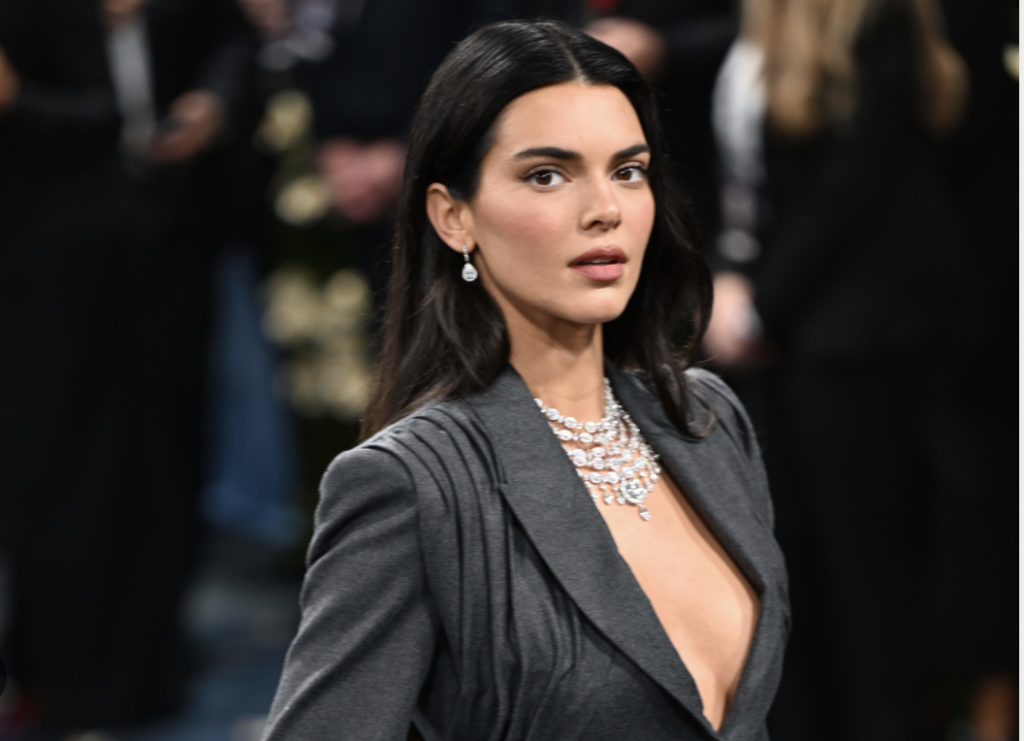


Kendall Jenner was born into visibility. Growing up as part of the Kardashian-Jenner family meant cameras were always present. Fame surrounded her from childhood. But visibility and credibility are two very different things.
When Kendall decided to enter the fashion industry professionally, she carried both opportunity and burden. Opportunity because her name was globally recognized. Burden because critics believed her modeling career would be built purely on family influence.
The fashion industry is notoriously selective. It values reputation, professionalism, discipline, and resilience. Many believed Kendall would be treated as a celebrity guest rather than a serious model.
But she approached modeling strategically.
Instead of relying only on commercial deals, she pursued high-fashion validation. She walked runways in New York, Milan, and Paris. She worked with established luxury brands. She endured long casting processes like every other model. She aimed to earn industry respect, not just social media attention.
Slowly, perceptions began shifting.
Kendall walked for some of the biggest names in fashion. She appeared on international magazine covers. She signed contracts with major global brands. Over time, she became one of the highest-paid models in the world.
Yet modeling, as powerful as it is, remains a career with a limited time horizon. The fashion industry evolves quickly. Trends change. New faces emerge constantly.
Kendall understood something important early:
Fame creates cash flow.
Ownership creates wealth.
This mindset became the foundation of her transition from supermodel to entrepreneur.
The Turning Point
The real turning point in Kendall Jenner’s journey came when she recognized the value of her direct audience connection.
With hundreds of millions of followers across social media platforms, she held one of the most powerful marketing tools in the modern economy — direct consumer access.
Unlike traditional celebrities who relied heavily on television or print media, Kendall belonged to a generation that controlled its own distribution channels. She could reach millions instantly without intermediaries.
Instead of limiting herself to endorsement deals, she decided to build a brand she owned.
That brand became 818 Tequila.
The beverage industry, especially spirits, is highly competitive. It is dominated by established global corporations with deep distribution networks and large advertising budgets. Entering this space is risky — especially for a celebrity.
Celebrity alcohol brands often receive skepticism. Critics assume they are short-term marketing projects designed to capitalize on fame.
Kendall approached it differently.
She focused on product credibility first. The tequila underwent blind taste tests and won industry awards. She emphasized authenticity in production and branding. The packaging was minimalist, modern, and aligned with her personal aesthetic.
Instead of loud, aggressive promotion, she leaned into lifestyle storytelling.
The brand was positioned as premium yet accessible. It targeted younger consumers who valued aesthetics, social sharing, and brand identity as much as taste.
Distribution partnerships were carefully selected. Retail expansion was gradual but steady.
The goal was not quick hype.
The goal was long-term brand equity.
The Strategy
Kendall Jenner’s entrepreneurial growth rests on five clear strategic pillars.
1. Credibility Before Commercialization
She built serious modeling credentials before launching her own venture. This strengthened her professional image and reduced the perception that she relied solely on family fame.
2. Audience Leverage
Her social media following drastically reduced customer acquisition costs. Traditional beverage brands spend millions on marketing campaigns. Kendall could launch directly to an existing global audience.
3. Premium Brand Positioning
Rather than competing on price, 818 Tequila was positioned as a lifestyle brand. Clean design, curated content, and influencer collaborations supported its premium perception.
4. Strategic Industry Partnerships
Kendall did not attempt to manage complex supply chains alone. She partnered with experienced operators in production and distribution, ensuring operational stability.
5. Controlled Public Image
Compared to the often dramatic media environment surrounding celebrity culture, Kendall maintained a relatively composed public presence. Stability enhances investor and consumer confidence.
The Result
Kendall Jenner successfully transitioned from runway dominance to structured entrepreneurship.
She became one of the highest-paid models globally while simultaneously building a scalable consumer brand. 818 Tequila expanded across major U.S. markets and into international distribution channels.
Financially, this shift moved her from income-based earnings to equity-based wealth creation.
More importantly, she reshaped the narrative around modern supermodels. In previous generations, models were primarily faces of brands. In today’s economy, they can become brand owners.
Kendall’s journey reflects a broader shift in celebrity economics. Social media has created a direct-to-consumer pathway. Influence, when combined with strategic execution, can generate enterprise value.
But influence alone is not enough.
Many celebrities launch products that fade quickly. Sustainability requires operational discipline, product quality, and consistent brand positioning.
Kendall’s success lies not simply in launching a product — but in building a system around it.