
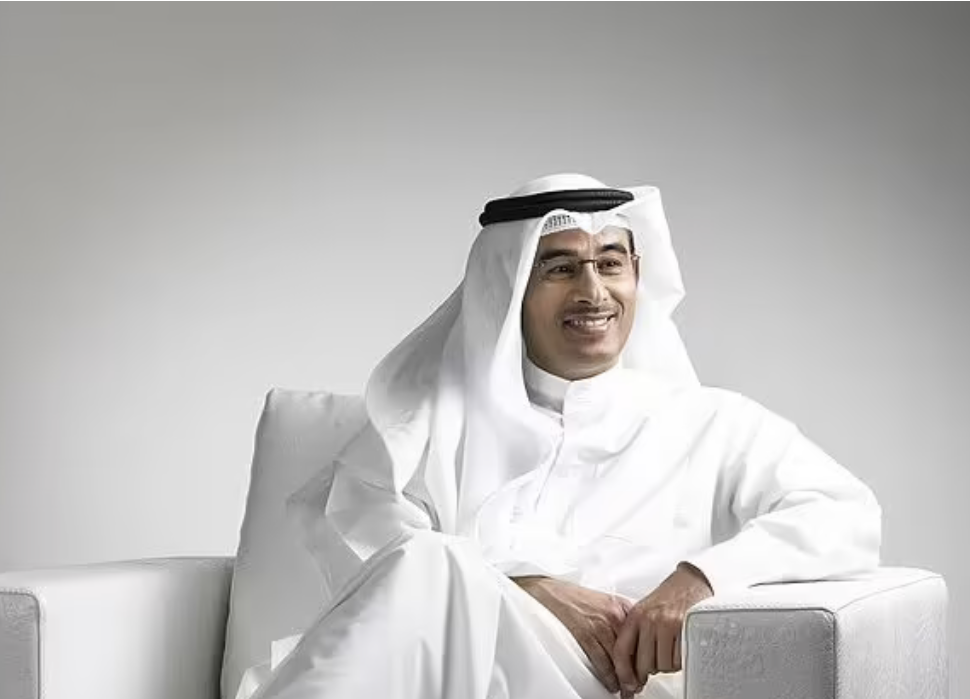
Mohamed Alabbar was born November 8, 1956, in the Rashidiya district of Dubai, United Arab Emirates. He was the eldest of 12 children. His father was a dhow captain—commanding traditional Arabian trading vessels that sailed to Somalia and other African ports trading goods.
Mohamed Alabbar’s childhood was defined by scarcity. Nine children slept in a single room. There was no luxury, barely any comfort. His father’s dhow trading business provided subsistence, not wealth. In Dubai’s pre-oil boom era, opportunities were limited. Most sons of dhow captains became dhow captains. The cycle continued.
But Mohamed Alabbar’s father instilled discipline, hard work, and a belief that education could break the cycle. When Mohamed showed academic promise, his family scraped together everything to support his education. In the 1970s, Mohamed received a government scholarship to study abroad—a life-changing opportunity.
He traveled to Seattle University in the United States, earning a degree in Finance and Business Administration in 1981. The scholarship wasn’t just financial support—it was validation. The UAE government believed in Mohamed’s potential enough to invest in him.
When Mohamed returned to Dubai in 1981, the UAE was transforming. Oil revenues were flowing, and Dubai’s ruler, Sheikh Rashid bin Saeed Al Maktoum, had a vision: diversify beyond oil, build world-class infrastructure, and make Dubai a global business hub.
Mohamed joined the government, quickly rising through Dubai’s Department of Economic Development. By the early 1990s, he was Director General—one of the youngest and most influential bureaucrats in Dubai. He had a front-row seat to Dubai’s economic strategy and deep relationships with leadership.
But Mohamed wasn’t satisfied being a government official. He saw opportunity. Dubai needed world-class real estate to attract international businesses and tourism. Most developers were building small-scale projects. Mohamed envisioned something bigger: iconic landmarks that would put Dubai on the global map.
In 1997, at age 41, Mohamed founded Emaar Properties with support from the Dubai government. The name ‘Emaar’ means ‘to build’ or ‘to develop’ in Arabic. His mission: build projects so iconic they redefine what Dubai represents.
The challenge was enormous. Dubai in 1997 was known for oil, not real estate. Convincing international investors to fund massive developments in a desert city seemed impossible. Most people thought Mohamed was crazy. He wasn’t—he was visionary.
The Turning Point
The defining moment came with the decision to build the Burj Khalifa, the tallest building in the world. It was a massive financial and engineering risk. Many doubted the feasibility and questioned the timing, especially during global economic uncertainty.
But Alabbar understood that an iconic structure would position Dubai permanently on the world map. This was not just a construction project; it was a strategic branding move. Alongside it, Downtown Dubai and Dubai Mall were developed as part of an integrated ecosystem.
This shift marked the transition from being a property developer to becoming a global destination creator.
The Strategy
Alabbar’s approach rested on three clear strategic pillars.
First, build iconic assets that generate global attention and long-term brand value. Landmark developments increase surrounding property demand and create emotional attachment to a location.
Second, focus on master-planned communities instead of isolated projects. By integrating residential, commercial, retail, and tourism components, Emaar created self-sustaining ecosystems that increased lifetime value for investors and customers.
Third, maintain financial discipline. Even while pursuing ambitious projects, Emaar followed structured financing, phased development, and asset-backed growth. This discipline allowed the company to survive market downturns that impacted many competitors.
The Result
Emaar became one of the most influential real estate brands in the Middle East and expanded internationally across multiple continents. Dubai transformed into a global city recognized for innovation, luxury, and architectural ambition.
The Burj Khalifa became a global symbol. Dubai Mall became one of the most visited retail destinations in the world.
More importantly, Mohamed Alabbar demonstrated that bold vision combined with strategic execution can reshape not just a company, but an entire city’s global positioning.
His success was not only measured in financial returns, but in legacy, influence, and long-term impact.