

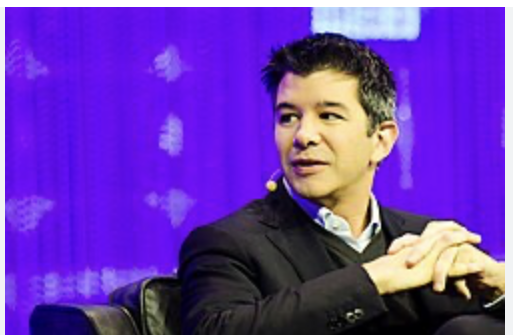
In 2000, Travis Kalanick’s first company, Scour (a peer-to-peer file-sharing service), went bankrupt after facing a $250 billion copyright infringement lawsuit from the entertainment industry. He was 24 years old. Most entrepreneurs would have quit. Travis started Red Swoosh, another file-sharing company, grinding for seven years before selling it to Akamai for $19 million in 2007.
By 2008, Travis was an angel investor living comfortably in San Francisco. Then, on a cold December night in Paris, he and his friend Garrett Camp couldn’t get a cab. They stood freezing, frustrated, and brainstorming: ‘What if you could request a ride with just a phone tap?’ That question became Uber.
But starting Uber wasn’t romantic—it was brutal. The taxi industry fought them violently. Regulators tried to shut them down in city after city. Traditional taxi unions protested. Governments banned Uber. Lawsuits piled up. Travis’s aggressive, move-fast-break-things approach made him enemies everywhere. By 2017, scandals around workplace culture, sexual harassment allegations, and regulatory battles forced him to resign as CEO.
The Turning Point
UberCab launched in San Francisco in 2010 with three cars. The idea was simple: tap your phone, get a ride. But execution was complex. Travis faced resistance from every direction—city governments, taxi unions, investors skeptical about regulations.
The breakthrough came from Travis’s ‘ask forgiveness, not permission’ strategy. Instead of waiting for regulatory approval, Uber launched in cities anyway, built massive user demand, then negotiated from strength. When cities tried to ban Uber, riders protested. Politicians couldn’t ignore millions of voters who loved the service.
By 2013, Uber operated in 66 countries and 360+ cities. Valuation hit $3.4 billion, then $18 billion (2014), then $51 billion (2015). Travis became a billionaire multiple times over. Uber wasn’t just a ride-hailing app—it was a cultural phenomenon that changed urban transportation forever.
The Strategy
Move Fast, Break Things: Travis launched in cities without permission, forcing regulators to react. This aggressive expansion created facts on the ground before opposition could organize.
Network Effects at Scale: More riders attracted more drivers. More drivers meant faster pickups. Faster pickups attracted more riders. This flywheel effect created a moat competitors couldn’t replicate.
Raise Massive Capital: Travis raised over $24 billion from investors including Google Ventures, Benchmark, SoftBank, and Saudi Arabia’s Public Investment Fund. This war chest funded global expansion and subsidized rides to kill competition.
Leverage Data and Technology: Uber’s algorithms optimized routing, pricing (surge pricing), and driver-rider matching. Technology gave Uber advantages traditional taxis couldn’t match.
Accept Controversy as Cost of Disruption: Travis knew Uber would face lawsuits, bans, and protests. He accepted this as the price of transforming an industry. Most founders would have backed down. Travis pushed harder.
The Results
Uber went public in May 2019 at a $82 billion valuation—one of the largest IPOs in history. Travis’s stake made him worth over $6 billion. Today, Uber operates in 10,000+ cities across 72 countries, completes 7+ billion rides annually, and has fundamentally changed urban mobility.
Travis left Uber in 2017 but didn’t disappear. He started CloudKitchens, a ghost kitchen company valued at $15 billion, proving he could build massive companies repeatedly.
Uber’s impact extends beyond rides. It pioneered the gig economy, normalized freelance work through apps, and inspired thousands of on-demand startups. Love him or hate him, Travis Kalanick changed how cities function.