

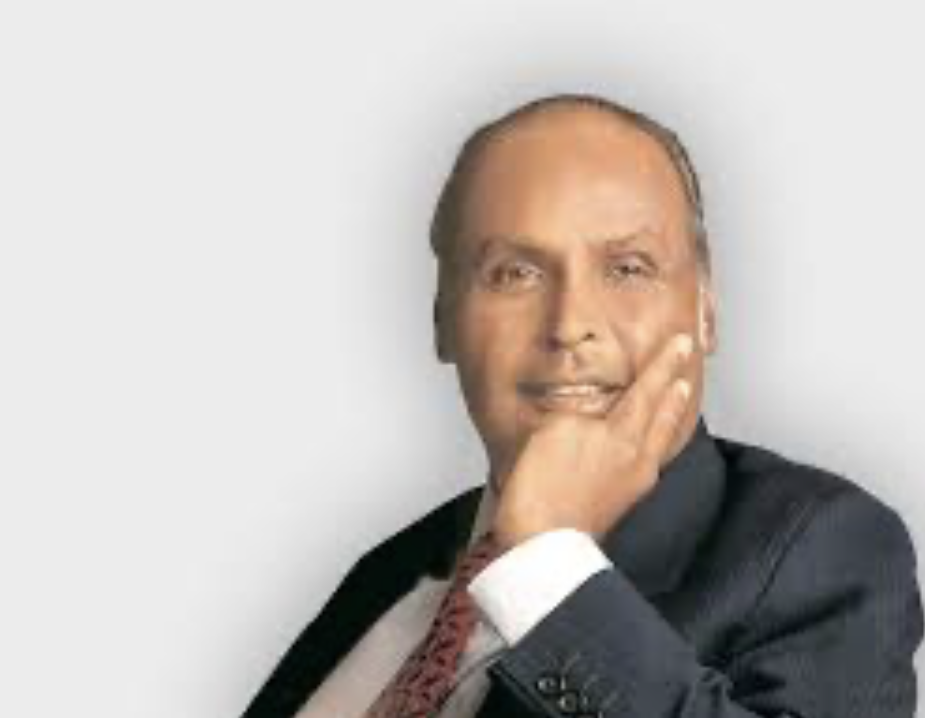
In 1932, Dhirubhai Ambani was born into a family with almost nothing. His father was a schoolteacher in Chorwad, a small village in Gujarat, earning barely enough to feed the family. As the third of five children, Dhirubhai watched his parents struggle daily. There was no money for luxuries, barely enough for necessities.
At age 16, Dhirubhai left India for Aden, Yemen, where he found work as a gas station attendant earning ₹300 per month. He pumped gas during the day and dreamed at night. Most people in his situation would have accepted mediocrity. Dhirubhai decided he would build an empire.
When he returned to India in 1958 with ₹50,000 (roughly $10,000) saved from years of work, he started Reliance Commercial Corporation in Mumbai. His first office was a single room with one desk, three chairs, and borrowed furniture. He had no connections, no business education, and no safety net. The Indian economy was suffocating under the License Raj—government permits controlled everything, bureaucracy crushed entrepreneurs, and established industrialists had a monopoly.
Most people told him to find a stable job. Dhirubhai ignored them and bet everything on one belief: if he worked harder, moved faster, and thought bigger than anyone else, he could change India’s business landscape forever.
The Turning Point
Dhirubhai started by trading polyester yarn and spices. While competitors accepted small margins and slow growth, he offered better quality, faster delivery, and tighter customer relationships. His business grew rapidly. But trading had limits. To truly win, he needed to manufacture, not just distribute.
In 1966, he made a bold move: opening India’s first synthetic textile mill in Naroda, near Ahmedabad. This wasn’t just risky—it was audacious. Manufacturing required massive capital, government licenses, and technical expertise he didn’t have. But Dhirubhai had vision. He created the Vimal brand, positioning polyester as stylish and affordable for middle-class Indians. The advertising campaign ‘Only Vimal’ became legendary.
The real turning point came in 1977 when he took Reliance public. This was revolutionary. In India, the stock market was dominated by wealthy elites and institutions. Ordinary people didn’t invest in stocks. Dhirubhai changed that. He invited small investors—shopkeepers, teachers, middle-class families—to become shareholders. He democratized wealth creation. Reliance’s IPO was oversubscribed seven times.
Annual general meetings became stadium events with 35,000+ attendees. Shareholders weren’t just investors—they were family. This created a base of 2 million retail shareholders who believed in Reliance like a religion. Dhirubhai built India’s first people-powered corporate empire.
The Strategy
Dhirubhai’s strategy was built on five pillars:
1. Backward Integration: Instead of relying on suppliers, Reliance produced everything in-house. This vertical integration gave him control over costs, quality, and timelines. By the 1980s, Reliance expanded from textiles into petrochemicals, refining, oil, and gas—building an integrated supply chain competitors couldn’t replicate.
2. Speed and Scale: While competitors moved cautiously, Dhirubhai moved aggressively. He built the world’s largest polyester plant. He expanded faster than regulators could react. Speed was his weapon.
3. Democratize Investment: By bringing millions of small investors into Reliance, he created a loyal base that stabilized the stock and provided capital without diluting control. Shareholders felt ownership because Dhirubhai made them feel like partners, not just investors.
4. Political and Bureaucratic Navigation: Dhirubhai understood that in License Raj India, relationships mattered as much as business acumen. He built networks in government, bureaucracy, and media. Critics called it crony capitalism; supporters called it smart business. Either way, it worked.
5. Resilience Under Fire:Dhirubhai faced constant battles—competitors, regulators, media attacks, stock market manipulation attempts. The famous ‘Bear Cartel’ of 1982 tried to short Reliance shares. Dhirubhai bought up shares, forcing short-sellers into massive losses. He won.
The Results
By the time Dhirubhai died in 2002 at age 69, Reliance Industries was valued at $25.6 billion. Today, under his son Mukesh Ambani, Reliance is worth over $200 billion, making it India’s largest private company and one of the world’s biggest conglomerates.
But Dhirubhai’s legacy isn’t just financial. He transformed India’s business culture:
• Made 2 million middle-class families shareholders, creating generational wealth
• Built India’s first vertically integrated petrochemical empire
• Proved that background doesn’t determine destiny—a gas station attendant from Gujarat became India’s most powerful industrialist
• Inspired generations of entrepreneurs to think big and move fast
He received the Padma Vibhushan, India’s second-highest civilian honor, and was named one of Asia’s most powerful people. But his real achievement was psychological: he made millions of Indians believe that if a schoolteacher’s son could build an empire, they could too.