
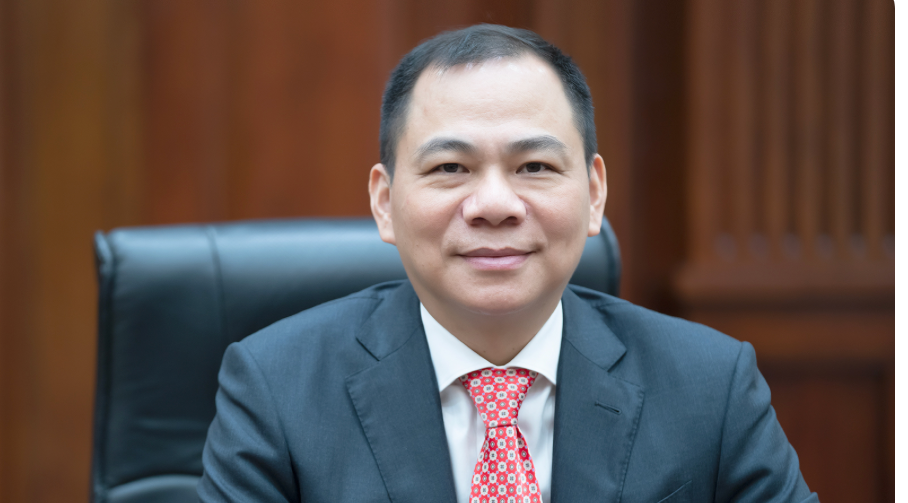
Pham Nhat Vuong’s first fortune came from instant noodles sold in Ukraine. His current one makes him the richest person in Southeast Asia. In between sits the most expensive bet any Vietnamese entrepreneur has ever placed.
Kharkiv
Vuong was born in Hanoi in 1968 and graduated from the Hanoi University of Mining and Geology before studying in Moscow. In 1993 he and his wife moved to Ukraine with roughly US$50,000, mostly borrowed, and started making instant noodles for a post-Soviet market with little money and less choice.
The business, Technocom, grew large enough that Nestlé eventually bought it. He took the proceeds back to Vietnam in the early 2000s and moved into property.
Vingroup
What he built in Vietnam was not a company so much as a parallel economy: apartments, shopping malls, hotels and resorts, hospitals, schools, and retail. For many Vietnamese, it is possible to live in a Vingroup building, shop in a Vingroup mall and be treated in a Vingroup hospital.
Vingroup’s shares rose roughly eightfold in 2025 and have continued climbing through 2026, making Vuong Southeast Asia’s wealthiest individual with a fortune estimated around US$34 billion. To many in Vietnam, including senior officials, the group is treated as evidence of the country’s transition to a market economy.
VinFast
In 2017 he founded VinFast to build a global carmaker from a country with no automotive industry to speak of. It listed on Nasdaq in 2023, where the shares more than doubled on debut.
It has still not broken even. Around US$17 billion of financing has been deployed since founding, and Vuong has personally contributed at least a quarter of it. He pledged 50 trillion dong — about US$2.1 billion — from his own assets, alongside Vingroup lending up to 35 trillion dong through 2026, and the group has converted roughly 80 trillion dong of loans into preferred shares to ease pressure on the carmaker.
At the April 2026 annual meeting he ruled out ever returning to petrol vehicles and set a target of 300,000 EV deliveries for the year, up from 197,000. The stated goal is break-even and cash-flow balance by the end of 2026.
The concentration question
The structure that makes this possible is also its main risk. A founder funding his own loss-making carmaker from personal wealth derived from a conglomerate that is also the carmaker’s parent is a closed loop. If sentiment turns on Vingroup, the support mechanism for VinFast tightens at exactly the wrong moment.
Vuong’s position is that the ecosystem — taxis, charging, services — keeps the vehicles in constant use and will carry the economics. That remains a thesis, not yet a result.
What the arc shows
Capital earned in one market can create an industry in another. Noodles in Kharkiv funded property in Hanoi, which funded an EV plant in Haiphong.
Conviction is cheap until you fund it personally. Few founders at this scale put billions of their own money behind an unprofitable venture.
National champions carry national expectations. VinFast is not just a company in Vietnam; it is a statement about what the country can build. That brings support, and it raises the cost of failure.
A man who sold noodles to students in Ukraine is now trying to put a Vietnamese car brand on roads in California. The next twelve months will say whether the bet lands.