

In 1997, a couple in Naivasha, Kenya, started making fortified wine in a country where the beer market belonged almost entirely to one company. Tabitha Karanja and her husband Joseph had no brewing background and no industry connections. What they had was the observation that millions of low-income Kenyans were drinking illicit, sometimes lethal, home-brewed alcohol because nothing affordable and legal existed for them.
Keroche Breweries became the first major locally owned brewery in Kenya, and the only serious domestic challenger to East African Breweries.
Building against a monopoly
Karanja became the company’s chief executive and its public face, to the point that she legally took the Keroche name. She has spoken repeatedly about what the early years required: limited capital, bureaucratic obstruction, distribution networks tied up by the incumbent, and boardrooms where she was asked to justify her presence before anyone discussed her business.
Her framing has been consistent — Keroche was not only a company but a challenge to an industry structure that had gone unchallenged for decades. Analysts at one point anticipated a genuine contest and called it “Beer Wars 2”.
The tax years
From 2019 onward, the company’s story became inseparable from its disputes with the Kenya Revenue Authority.
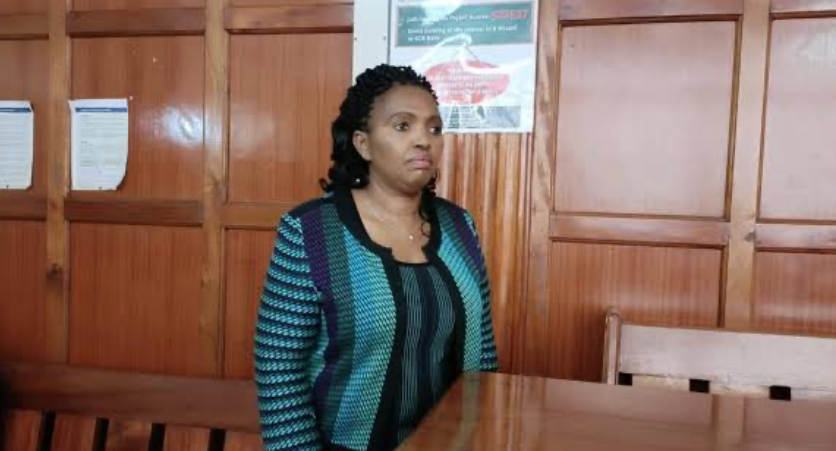
Karanja and her husband were arrested in 2019 over alleged tax evasion, which they denied. The KRA later said Keroche owed billions of shillings in unpaid taxes; the company disputed the figures and negotiated payment plans. The Naivasha plant was shut down in December 2021, reopened in March 2022, and closed again that July, with Karanja warning that hundreds of millions of shillings of beer would be lost and over 400 workers would be affected. She was charged in 2022 with multiple counts relating to a Sh14.5 billion tax case, which she denied.
These remain disputes and proceedings, not settled conclusions. The plant has since resumed production, and related insolvency proceedings have continued into 2026.
A second career
In 2022 Karanja was elected senator for Nakuru County, winning by a wide margin. In February 2026, after 25 years, she stepped down as Keroche’s chief executive, handing over to the company’s chief financial officer and saying she was ready to dedicate herself to the Senate, where she serves as a deputy majority leader.
In June 2026 she received an honorary doctorate in business leadership in Kigali, where she spoke about women entrepreneurs being required to prove their worth repeatedly in rooms where men are assumed to belong.
What the story holds
Underserved does not mean unprofitable. The customers Keroche built for were the ones the industry had written off entirely.
Challenging an incumbent is a regulatory fight as much as a commercial one. In heavily taxed industries, compliance capacity is competitive capacity, and a challenger has less margin for error than the giant across the road.
Founder and company can become the same entity. She took the company’s name. That bound her reputation to its fortunes in both directions.
Whatever the courts eventually determine, the first part of the record is not in dispute: a woman with no brewing experience built Kenya’s first major locally owned brewery and made a monopoly compete.