
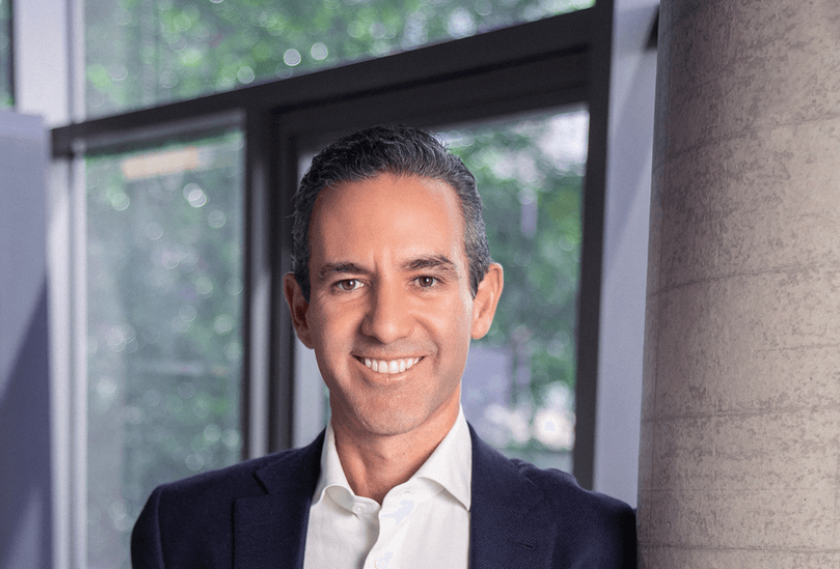
In 2012, a Colombian named David Vélez moved to São Paulo and tried to open a bank account. It took months. There were queues, bulletproof glass, documents, and fees nobody could explain to him.
Most newcomers would call that an annoyance and move on. He treated it as evidence that something was broken at scale. Thirteen years later, the company he started because of it serves more than 135 million customers.
An outsider’s advantage
Vélez was not a banker by background. He had worked in investment banking and venture capital, and had come to Brazil to look at Latin American deals. Being an outsider was the whole point: Brazilians had lived with the oligopoly of a handful of giant banks for so long that the queues and the fees had stopped registering as strange.
He founded Nubank in May 2013 with Cristina Junqueira, a Brazilian who had run credit card products at one of the incumbents, and Edward Wible, an American engineer. That combination — outsider’s perspective, insider’s knowledge of the regulation, and someone to build the thing — is the most under-copied part of the story. Vélez has been unusually disciplined in public about recognising where he needed complementing.
The product was almost insultingly simple: a purple credit card with no annual fee, managed entirely from a phone.
The numbers now
Nubank serves over 135 million customers across Brazil, Mexico and Colombia. More than 60% of Brazilian adults are customers, and around 60% of those use it as their primary bank. It crossed US$1 billion in quarterly net income in 2026, and passed US$5 billion in quarterly revenue, with an activity rate above 80%.
It is now the largest private financial institution in Brazil by customer numbers, and among the most valuable companies in the world by market capitalisation. The Mexican operation reached break-even faster than Brazil did. In January 2026 Nu received conditional approval to operate as a national bank in the United States, and it has been opening offices in Miami, Palo Alto and Washington.
The company has committed R$45 billion of investment in Brazil for 2026 — roughly double the figure of two years ago — directed at AI-based credit models, new products, teams and capital.
What is actually transferable
Friction that everyone tolerates is the biggest opportunity there is. The Brazilian banking queue was not a secret. It was simply accepted. Vélez’s advantage was refusing to accept it.
Regulated industries reward patience, not speed. Nubank spent years as an unprofitable credit card company before becoming a bank. The moat was built during the boring part.
Primacy beats sign-ups. Anyone can give away an app. The metric Nubank optimises for is whether you move your financial life to it, which is a far harder thing to win and a far harder thing to lose.
The harder question ahead
Latin America’s incumbents have had thirteen years to respond and have largely failed to. The United States is a different proposition entirely: a crowded market with well-capitalised digital challengers and no equivalent of the pain point that made Nubank obvious in Brazil.
Vélez has also been selling shares steadily for estate-planning reasons, and he and his wife Mariel Reyes have moved visibly into philanthropy, appearing on TIME’s philanthropy list this year.
Whatever happens next, the origin remains the most instructive part. A man stood in a queue, got angry, and asked why. Most people stand in the queue.